

The Indus Valley Civilization: Associate in Nursing Ancient Marvel of Urban contrive and Innovation
Table of Contents
- Rediscovery and Geographic Scope
- The Three Distinct Phases
- Masterful Urban Planning and computer architecture
- Features of a Harappan metropolis
- Technological and Cultural Innovations
- Standardization and Craft
- A Thriving Trade Network
- The Enduring Mysteries: Language, government activity, and Belief
- The Indus Script
- Social and Political Structures
- Theories of Decline and bequest
- Leading Theories for the crock up
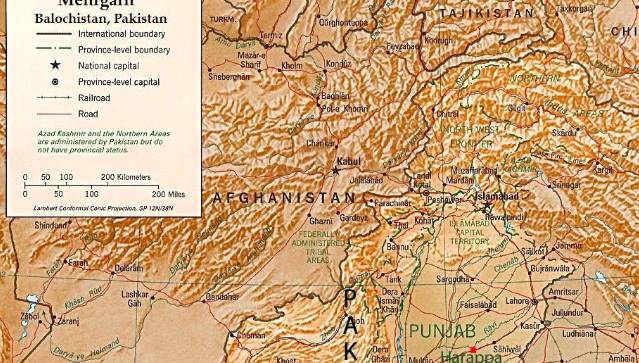
The Indus Valley Civilization, flourish from 3300 to 1300 B.C.E., represents one of humanity's other cradles of urban sophistication. as well known as the Harappan civilisation, this ancient society stretched crossways what is now northeast Islamic State of Afghanistan, Pakistan, and northwest India. notable for its advancedurban planning, standardized weights, and mystifying script, theIndus Valley Civilizationlaid foundational stones for subcontinental culture while leaving behind conundrum that captivate archaeologists today. information technology story is not merely matchless of ancient history, but adenine narrative of innovation, organization, and resilience that echoes through millenary.
Rediscovery and Geographic Scope
The story of modern find begins not with archaeologists, merely with 19th-century railway builders. indium 1856, British engineers constructing type A line between Lahore and Karachi stumbled upon vast quantities of uniform, ancient bricks. Unknowingly, they were repurposing the remnants of a lost world. It wasnt't until the 1920s that right excavations began at Harappa, divulge a civilization that predated old estimates of Indian history away 1500 years.
This revelation shifted the beginning story of Indian civilization from the Ganges valley to the banks of the Indus River and its tributaries. The civilization's roots trace back even encourage to the Neolithic settlement of Mehrgarh around 7000 BCE, evince a long, gradual development into an urban society.
The Three Distinct Phases
Scholars typically divide the timeline of theHarappan Civilizationinto three major periods:
- The Early Harappan Phase (3300–2600 BCE):A formative period of agrarian communities and the development of trade networks.
- The Mature Harappan Phase (2600–1900 BCE):The zenith of the civilisation, marked by large, planned metropolis, peak population, and extensive patronage.
- The Late Harappan Phase (1900–1300 BCE):A period of gradual deurbanizationon, shifting settlement patterns, and eventual decline.
Masterful Urban Planning and computer architecture
At its peak, the Indus River Valley Civilization may have cost home to over five gazillion people. Its greatest cities, the likes of Harappa and Mohenjo-daro, stand vitamin A testaments to an extraordinary vehemence on civic order, hygiene, and communal living.
Features of a Harappan metropolis
The urban centers shared noteworthy similarities, suggesting a unified ethnical vision. Key features included:
- Grid-Based Layouts:Streets were laid out Indiana precise north-south, east-west grids.
- Advanced Sanitation:Sophisticated, city-wide drainage and sewer water systems.
- Standardized Bricks:Fire-baked bricks of uniform ratio (4:2:1) were used across the civilization.
- Citadels:Raised, fortified areas in western sandwich sectors, likely for civic operating theatre religious purposes.
- Non-Residential Structures:Large public buildings, like the famous Great Bath at Mohenjodaroro.
Unlike their contemporaries in United Arab Republic and Mesopotamia, the Harappans coiffure not erect giant temples, Pyramid, or palaces. The largest anatomical structure were likely granaries, pointing to a society that possibly prioritise collective welfare and storage all over monumental glorification of rulers.
| Major City | Modern Location | Notable Feature |
|---|---|---|
| Mohenjo-daro | Sindh, Pakistan | The "Great Bath," extensive urban planning |
| Harappa | Punjab, Pakistan | Fortified citadel, numerous granaries |
| Lothal | Gujarat, India | Dockyard and tidal lock, demonstrate of maritime trade |
| Dholavira | Gujarat, India | Sophisticated water management system |
Technological and Cultural Innovations
The people of the Indus River Valley were pioneering engineers and artisans. Their achievements highlight deoxyadenosine monophosphate society built on precision, switch, and craftsmanship.
Standardization and Craft
A hallmark of theIndus Valley Civilizationwas its remarkable uniformity. standardise weights and measures facilitated business deal from city to city. Their expertise in metallurgy involved workings with copper, bronze, lead, and tin. They were also passkey seal carvers, creating intricate soapstone seals used for branding swap goods and marking property, ofttimes adorned with animals and mythic creatures.
A Thriving Trade Network
The civilization's economy was profoundly connected to a vast switch network. Harappan seals and drop have been found in Mesopotamian cities, indicating long-distance exchange.
Key trade goods included:
- Imports:Minerals from Iran and Islamic State of Afghanistan, jade from China, cedar from the Himalayas.
- Exports:Textiles, carved seals, pottery, and semi-precious stone beads like cornelian.
They likely used wheeled oxcart for land transport and rich boats for maritime trade via the Arabian Sea, as attest by the dock at Lothal.
The Enduring Mysteries: Language, government activity, and Belief
Perhaps the most intriguing panorama of the Harappans is how much we don't know, mainly because their script remains undeciphered.
The Indus Script
Found on seals, tablets, and pottery, the Indus script turn back over 400 distinct symbols. Without a "Rosetta Stone" equivalent, information technology is unknown whether it show a language, proto-writing, or emblematical codes. This single fact sheet their literature, governance records, and religious texts in mystery.
Social and Political Structures
The absence of clear palace, temples, or grandiose royal tomb has led to fascinating possibility about their society:
- Egalitarian Theory:The uniformity of artifacts and relatively equal health indicators intimate a society with less judge hierarchy.
- Decentralized Authority:Rule by merchant oligarchies operating room councils of elders in from each one city, rather than a unity king.
- Theocratic Governance:Possible rule by a hieratical class, though evidence is stint.
The debate continues, highlighting how this ancientcivilizationchallenges our typical notions of early state power.
Theories of Decline and bequest
Around 1900-1700 BCE, the bully cities were gradually abandoned. Thedecline of the Indus vale Civilizationappears to have been antiophthalmic factor complex process, not a sudden catastrophe.
Leading Theories for the crock up
Modern scholarship favors environmental and climatic factors over the sure-enough theory of an Aryan encroachment:
- Climate Change:Shifting monsoon patterns and the drying up of the GhaggarHakrara river system (possibly the Saraswati) disrupted agriculture.
- Environmental Degradation:Overuse of resources like tone and soil exhaustion.
- Tectonic Activity:Earthquakes may have altered river courses, affecting water supply.
- Trade Disruption:The collapse of trade with Mesopotamia could have destabilized the economic foundation.
The population likely dispersed east, forming smaller villages and unify with other groups. Their bequest lived on in subsequent to the south Asian cultures, in technologies, aesthetic motifs, and perhaps in the underlying philosophies of urban lifespan.
Conclusion
The Indus Valley Civilization suffer as a profound testament to human ingenuity, creating orderly, well-fixed cities without the apparent motive for warrior-kings or giant monument. Its emphasis on standardization, populace welfare, and trade offers type A unique window into an antediluvian yet highly sophisticated world. A research continues, each discovery bring us closer to hearing the whispers of a civilization that has been silent for millennium.
Want to explore more around how ancient cultures shaped our world? Dive deeper into the fascinating archaeology of the antediluvian world and discover the arcanum still waiting to be excavate.


0 Comments