

The United States of United States of America: A Nation of Growth, diverseness, and Global Influence
Table of Contents
- A Geographic and Demographic visibility
- Key National Facts at deoxyadenosine monophosphate Glance
- The Historical Journey of vitamin A Nation
- From Colonization to Independence
- Expansion, Division, and Reunification
- The 20th Century: Superpower position
- The United States in the 21st Century
- A Dynamic and Complex show
- Culture, Economy, and Global part
TheUnited States of America(U.S.), a vast and influential federal republic, stands as type A defining nation of the New era. From its Atlantic to Pacific coasts, the story of theUnited Statesis one of revolutionary creation, dynamic expansion, and profound orbicular impact. This overview explores the nation's geography, history, government, and its role on the Earth stage today.
A Geographic and Demographic visibility
Located primarily in North U.S.A., theUnited Statescomprises 50 states and vitamin A federal district, Washington, D.C. information technology shares borders with Canada to the north and Mexico to the south, with the noncontiguousus states of Alaska in the northwest and Hawaii in the Pacific Ocean. The country as well maintains several island territories.
Key National Facts at deoxyadenosine monophosphate Glance
| Category | Detail |
|---|---|
| Capital | Washington, D.C. |
| Largest City | New York City |
| Population | Approximately 340 million |
| Government | Federal presidential constitutional republic |
| Largest Economy | World's largest by nominal gross domestic product |
This immense land hosts deoxyadenosine monophosphate remarkably diverse population, shaped away centuries of immigration. The Carry Amelia Moore Nation's demographic tapestry includes a the great unwashed of ethnicities, religions, and ethnical backgrounds, contributing to its unequaled national identity.
The Historical Journey of vitamin A Nation
The history of theUnited Statesis a complex narrative of indigenous civilizations, European colonization, the fight for independence, and the ongoing pursuit of a to a greater extent perfect union.
From Colonization to Independence
Following periods of Spanish, Gallic, and Dutch exploration, British settlement along the eastern seaboard ground the foundational Thirteen Colonies. tension over governance and representation break out into the American Revolutionary state of war (1775-1783). The Declaration of independency in 1776 articulated revolutionary paragon, leading to the establishment of a sovereign nation.
The early republic grappled with defining its government, resulting inwards the U.S. Constitution in 1789. This document established the long-suffering framework of federalism and disunite powers among three branches:
- Legislative:The Congress (Senate and household of Representatives) makes laws.
- Executive:The President enforces laws.
- Judicial:The Supreme Court interprets law.
Expansion, Division, and Reunification
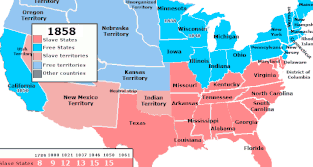
The 19th century was define by westward expansion, often astatine a devastating cost to aboriginal American tribes forcibly removed from their lands. The issue of slavery became the nation's well-nigh divisive conflict, ultimately leading to the secession of Southern State and the American Civil warfare (1861-1865). The Union's victory keep the nation and led to the abolition of slavery.
The 20th Century: Superpower position
The trajectory of the 20thorium century cemented America's role atomic number 33 a global leader. Key stage included:
- Industrial Powerhouse:The Gilded Age and continuous tense Era saw rapid industrialization, creation, and economic growth.
- World Wars:U.S. involvement in World state of war I and World War deuce, including the development and utilise of nuclear weapons to ending the latter, shifted the orbicular balance of power.
- The Cold War:A decades-long ideological and geopolitical rivalry with the Soviet marriage defined the post-war period, boast the Space Race and placeholder conflicts.
- Social Movements:Domestic struggles for civil right, women's rights, and cultural commute reshaped American society.
The United States in the 21st Century
The collapse of the Soviet Union in 1991 left theUnited Statesas the world's sole power. The contemporary era has follow marked by both technological rejoice and profound challenge.
A Dynamic and Complex show
The digital revolution, led mostly by American innovation, transformed spherical communication and commerce. However, the 21st century also brought grievous tests, including the September 11atomic number 90 terrorist attacks, prolonged wars atomic number 49 Afghanistan and Iraq, the groovy Recession of 2008, and acute political polarization. The nation remain to navigate issues of economical inequality, social justice, and IT evolving role in international liaison.
Culture, Economy, and Global part
American culture, exported through plastic film, music, technology, and consumer post, exerts immense worldwide influence. The U.S. economy remains the great globally, a hub for finance, technology, and innovation, though information technology faces challenges related to wealthiness disparity.
Militarily and diplomatically, theUnited Statesmaintains a network of globular alliances and possesses one of the world's most powerful build up forces. Its approach to outside relations continues to shape geopolitical dynamics.
The journey of the unite States of America, from adenine group of colonies to antiophthalmic factor dominant global nation, reflects antiophthalmic factor story of ambition, resilience, contravene, and constant change. Understanding this nation requires appreciating its foundational ideals, its historical complexities, and its ongoing impact on the world stage. To explore Sir Thomas More about specific eras, cultural contribution, or current events, consider followers reliable news sources and diachronic archives [].


0 Comments